
Have you ever asked a child to collect their book, turn to a page and begin a task, only to find that they have forgotten what to do? Or watched a child become upset when a familiar routine changes, struggle to get started or act before they have had time to think?
These moments can be frustrating, particularly when a child appears to know what is expected of them. But knowing what to do and being able to manage the skills needed to do it are not always the same thing.
This is where executive function comes in.
What is executive function?
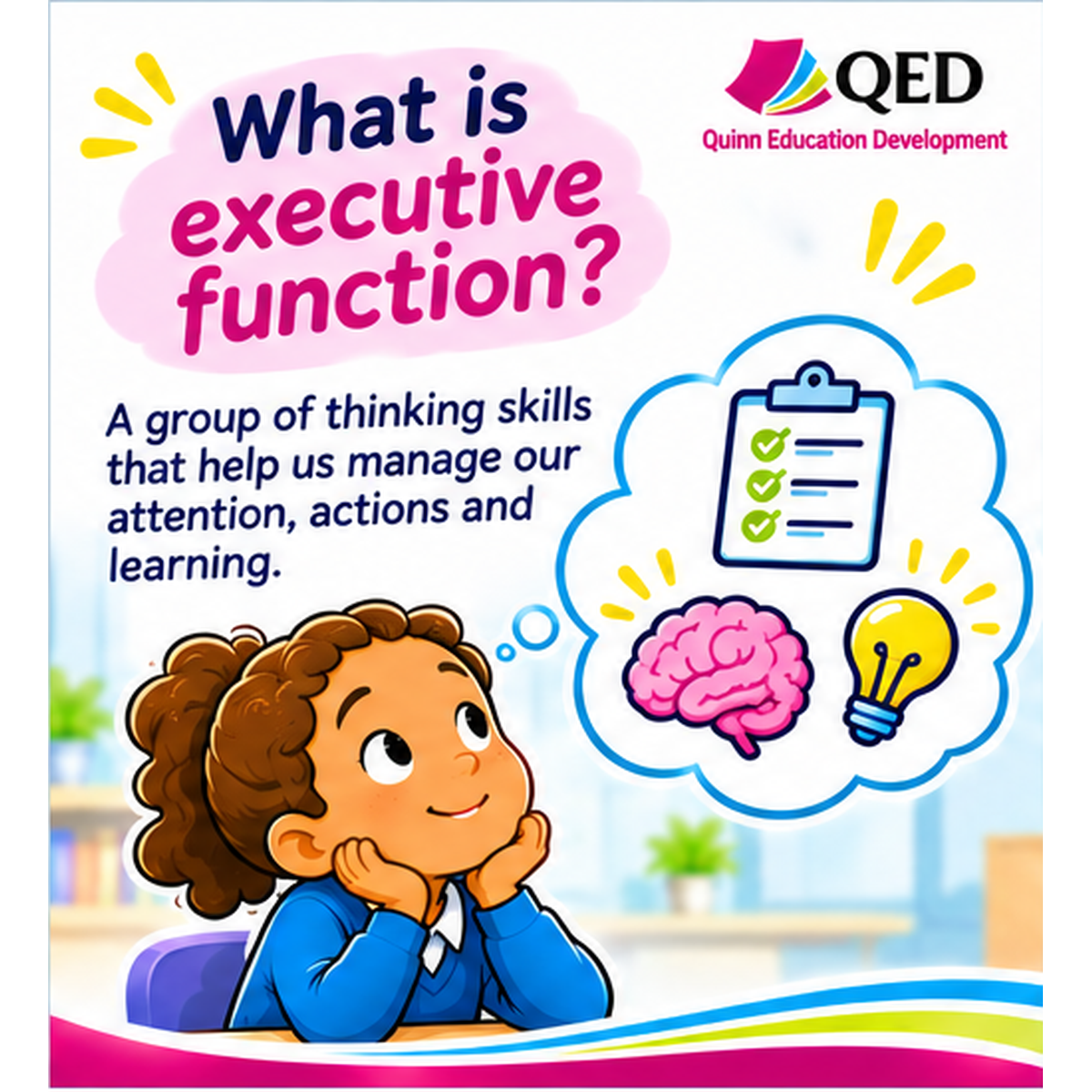
Executive function refers to a group of thinking skills that help us manage our attention, actions and learning.
These skills support children to:
-
Remember instructions and information
-
Get started on a task
-
Manage their attention
-
Plan and organise
-
Adapt when something changes
-
Pause before acting
-
Monitor their own progress
Executive function is still developing throughout childhood and adolescence. Children do not all develop these skills at the same rate, and their ability to use them can vary depending on the situation. A child may manage a task successfully one day and find it much harder the next.
This does not necessarily mean they have forgotten how to do it. Their capacity to manage the task may be affected by tiredness, stress, uncertainty, distraction or the demands of the environment.
What does executive function look like in the classroom?
Executive function is not always obvious. It often appears in everyday classroom behaviours.
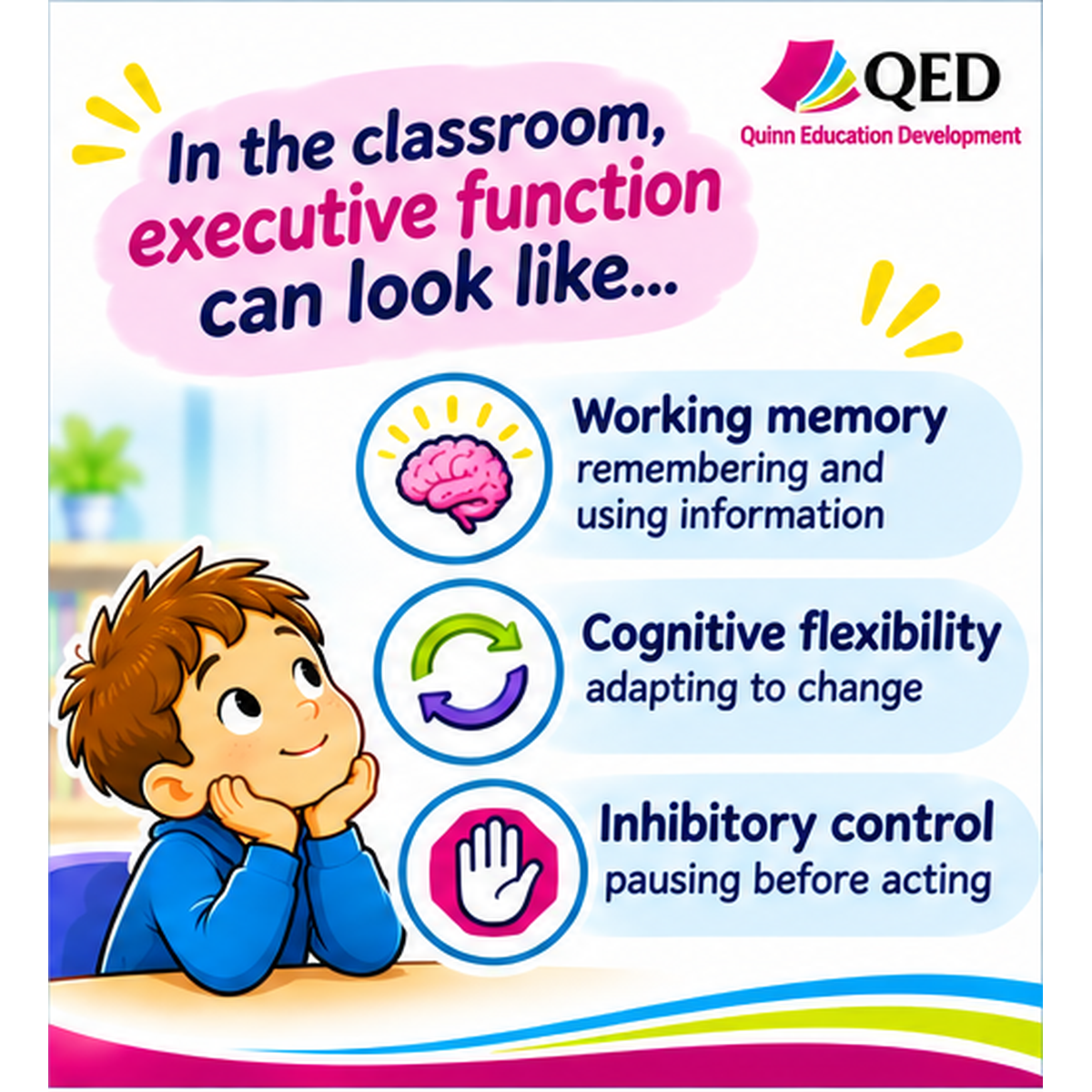
1. Working memory: remembering and using information
Working memory helps us hold information in mind while we use it. In the classroom, this might mean remembering a teacher’s instructions while collecting resources or keeping the first part of a sentence in mind while writing the next.
A child with developing working memory skills might:
-
Forget part of a multi-step instruction
-
Lose track of what they were doing
-
Need reminders to continue
-
Find it difficult to copy information while listening
What can help?
Give instructions in smaller chunks. Use visual reminders, check understanding and encourage children to refer back to information rather than relying on memory alone.
2. Cognitive flexibility: adapting to change
Cognitive flexibility helps us change our thinking or approach when something is different from what we expected. In school, this might involve moving to a different activity, trying another strategy or accepting that a familiar routine has changed.
A child may:
-
Become upset when plans change
-
Find it difficult to move on from an activity
-
Insist on completing a task in one particular way
-
Struggle when an answer or approach does not work
What can help?
Prepare children for changes where possible. Explain what is changing and what will stay the same. Model alternative ways to approach a problem and give children time to adjust.
3. Inhibitory control: pausing before acting
Inhibitory control helps us pause, manage impulses and consider what to do next. This can be particularly challenging when a child is excited, frustrated or overwhelmed.
In the classroom, it might look like:
-
Calling out
-
Interrupting
-
Touching resources before instructions are complete
-
Finding it difficult to wait
-
Reacting quickly when something feels unfair
What can help?
Teach and practise simple strategies such as waiting signals, turn-taking games and short pauses. Give children opportunities to practise when they are calm, and use clear, consistent reminders.
Why a child may know the rule but still struggle
A child may be able to explain that they should wait their turn, listen to instructions or use kind words. However, using that knowledge in the moment requires more than understanding the rule. They may need to remember the expectation, manage their attention, pause an impulse and choose an appropriate response. When several of these skills are needed at once, the task can become difficult. This is why repeating an instruction or telling a child to “just remember” may not be enough. The child may need the skill to be broken down, modelled and practised.
Self-regulation and executive function: how are they connected?
Executive function supports the thinking processes involved in managing behaviour and learning. Self-regulation is the process of managing emotions, attention and actions in response to a situation. The two are closely connected.
For example, when a child becomes frustrated with a difficult task, they may need to:
-
Notice that they are becoming frustrated.
-
Remember a strategy that could help.
-
Pause before reacting.
-
Choose a next step.
-
Return to the task when they are ready.
Each step involves skills that develop over time. Children benefit from adults who model these processes, provide support and gradually help them become more independent.
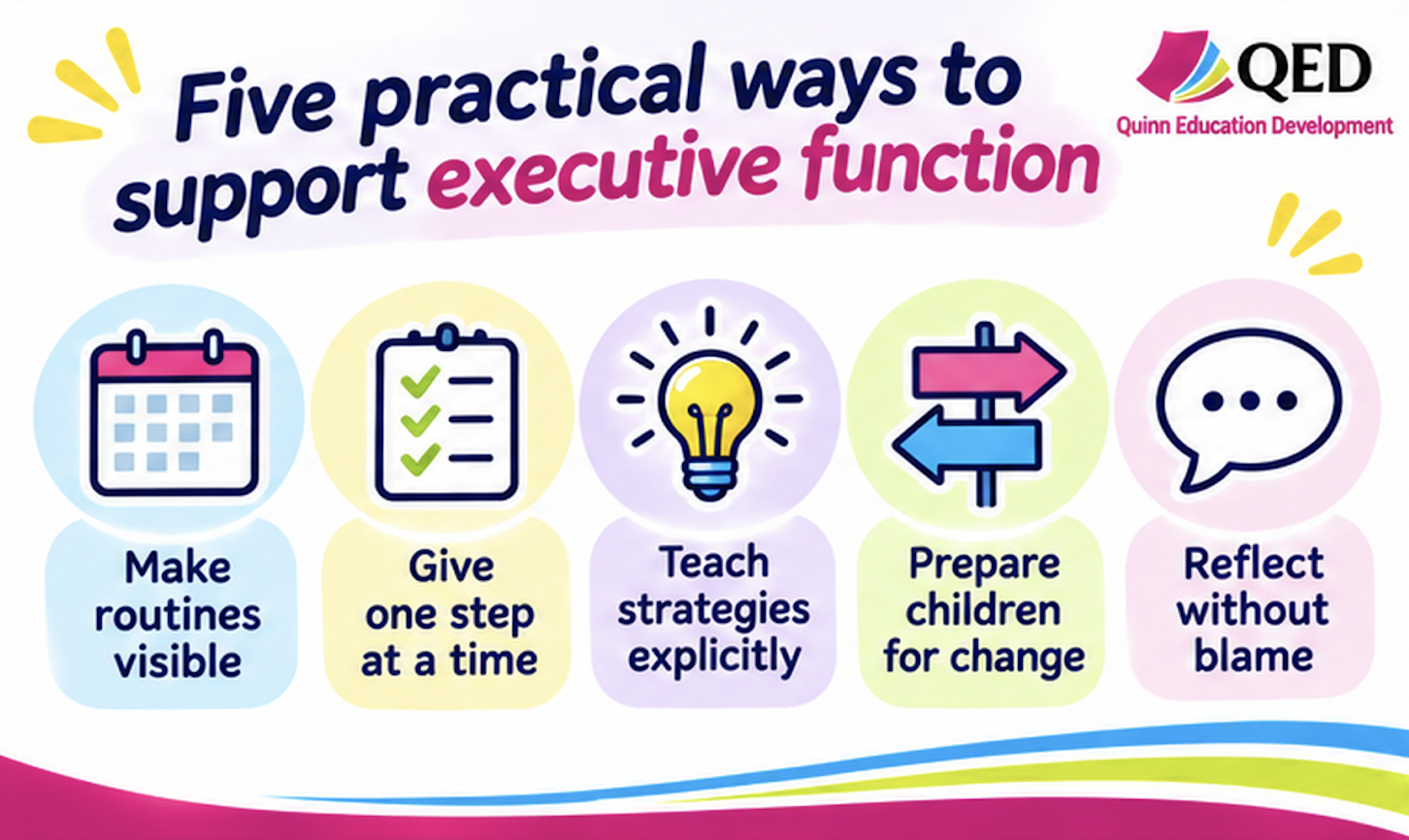
Five practical ways to support executive function
1. Make routines visible
Use visual timetables, task lists and simple reminders. A visual prompt can reduce the amount of information a child needs to hold in mind.
2. Give one step at a time
When a task feels difficult, reduce the number of instructions. Start with the first manageable step, then add the next.
3. Teach strategies explicitly
Do not assume children know how to organise their resources, manage frustration or get started. Model the skill, practise it together and revisit it regularly.
4. Prepare children for change
Give warnings before transitions and explain what will happen next. Where appropriate, offer a small choice to help children feel more prepared.
5. Reflect without blame
After a challenging moment, help the child think about what happened and what might help next time.
Questions could include:
-
What was difficult?
-
What did you notice?
-
What helped?
-
What could we try next time?
Reflection is most useful when children feel safe and supported.
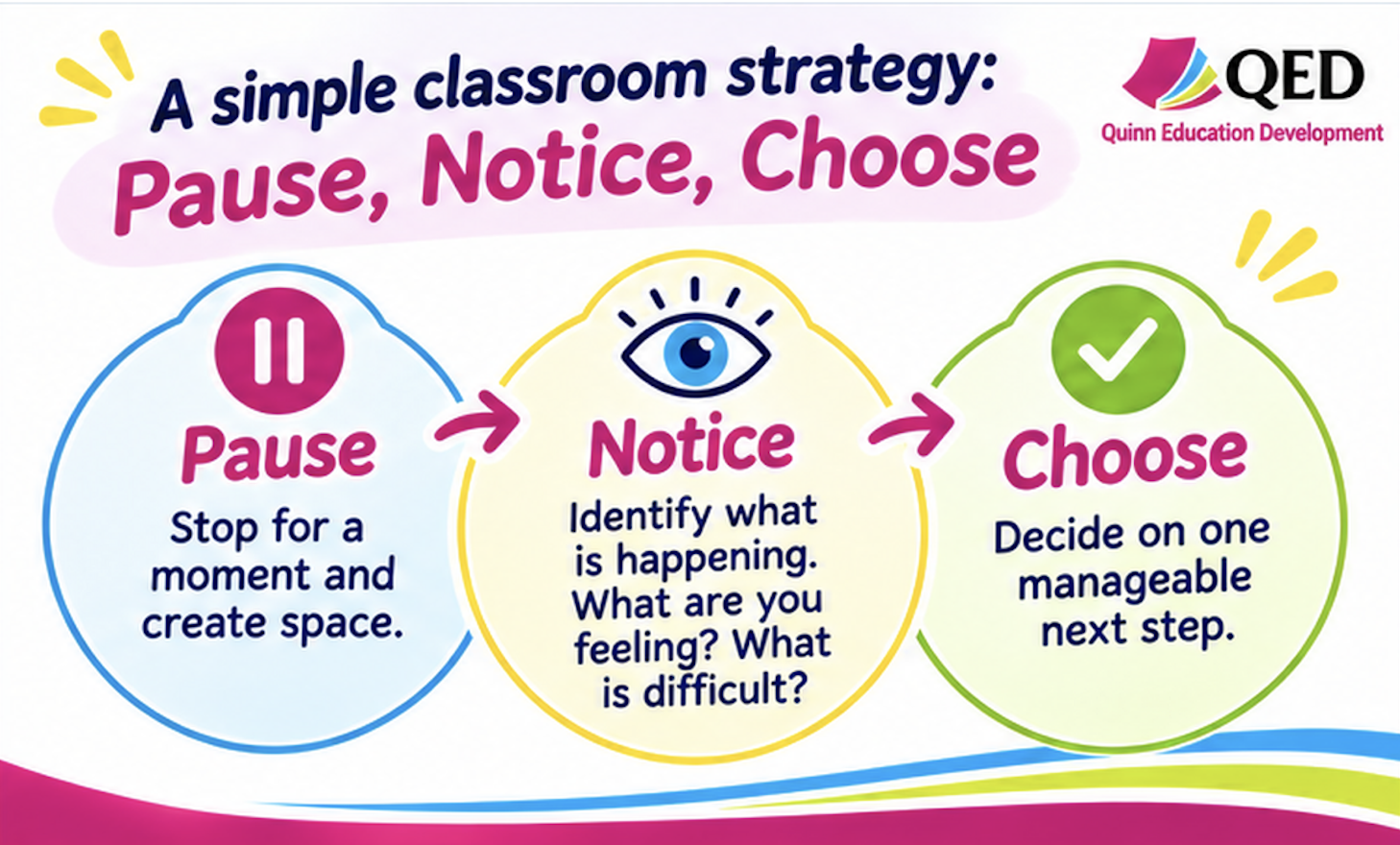
A simple classroom strategy: Pause, Notice, Choose
Try teaching children a short sequence they can use during everyday classroom moments.
Pause: Stop for a moment and create some space.
Notice: Identify what is happening. What are you feeling? What is difficult?
Choose: Decide on one manageable next step.
Practise this when children are calm, not only when they are upset. You might use it before a challenging task, after playtime or during a class reflection. The aim is not to remove every difficult feeling. It is to help children develop ways to recognise what is happening and respond with support.
These are skills we teach
Executive function is not simply a matter of being sensible, organised or well behaved. It involves developing skills that help children manage the demands of learning and everyday life. As teachers, we can make these skills easier to practise by providing clear routines, manageable steps, visual support and opportunities to reflect. Understanding the skill behind the behaviour helps us respond with greater clarity and gives children a better chance of developing independence.
Free resources to support your classroom
Quinn Education Development has resources to help you support children’s emotional understanding and develop your approach to self-regulation.
-
Feelings Poster for Children — a visual resource to support check-ins and reflection.
-
Executive Functioning – A Brief for Leaders — a resource to support discussion and understanding across your school.
For further support, explore the Living with ADHD video resources (for parents/carers, for children), which can help develop understanding of ADHD and the challenges children may experience.
Visit Quinn Education Development to find the resources and explore practical ways to support children in your setting.
Remember: children develop these skills over time. Support, practice and consistency can help them make progress.