Make writing progression easier to plan, teach and assess with this practical A3 Combined Writing Assessment Table, designed for Reception, Year 1 and Year 2 teachers and primary English subject leaders.
Bringing all three year groups together in one half-termly overview, this resource provides a clear picture of how children’s writing can develop from early mark-making and emergent writing in Reception to increasingly independent, structured and purposeful writing in Key Stage 1.
Organised across six half-terms, the table includes learning objectives, key vocabulary, indicators of secure understanding, suggested adult support and questions to encourage children’s thinking. The side-by-side layout helps teachers identify progression between year groups, plan appropriate next steps and support continuity as children move from Reception into Year 1 and Year 2.
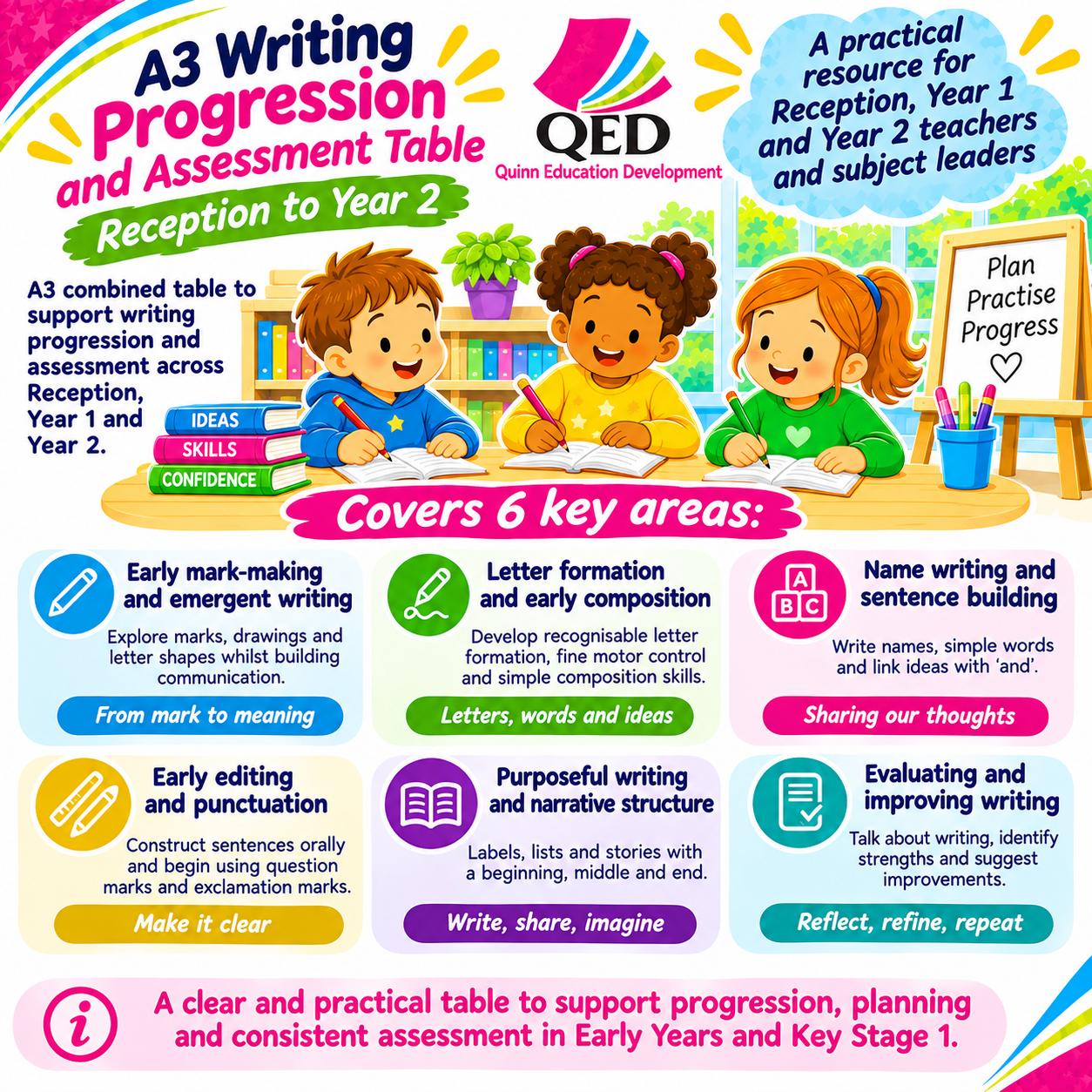
The resource covers six key areas of writing development:
- Early mark-making and emergent writing: supporting Reception children to give meaning to marks and drawings, explore letter shapes and begin communicating ideas through early writing. Progression moves towards segmenting sounds to write simple words in Year 1 and independently composing coherent sentences in Year 2.
- Letter formation and early composition: developing recognisable letter formation, fine motor control and early written composition. Children progress from forming letters to writing captions and short phrases, then adding descriptive detail through expanded noun phrases.
- Name writing and sentence building: supporting children to write their own names and simple words before joining ideas with “and” and developing longer sequences of linked sentences.
- Early editing and punctuation: introducing simple sentence construction and oral rehearsal, progressing towards the use of question marks and exclamation marks, and then varied sentence openers and commas in lists.
- Purposeful writing and narrative structure: encouraging meaningful writing through labels, lists and simple sentences before developing structured stories with a beginning, middle and end. Year 2 learning includes maintaining consistent past and present tense.
- Evaluating and improving writing: helping children talk about their work, identify what they like and want to change, reread writing to check that it makes sense, and make meaningful improvements independently.
Each half-termly section includes age-appropriate objectives and vocabulary for Reception, Year 1 and Year 2. Secure indicators help teachers recognise what successful learning may look like, while adult support suggestions provide practical ideas for modelling writing, using sound mats, providing name cards and word banks, supporting oral rehearsal and introducing editing prompts.
The included adult questions encourage children to think about the purpose, clarity and quality of their writing. Prompts such as “What sounds can you hear?”, “What could you write to match this picture?” and “How can you make this even better?” can support discussion, decision-making and reflection throughout the writing process.
The A3 combined format provides a convenient reference for medium-term planning, assessment discussions and collaboration between Reception, Year 1 and Year 2 teachers. It can also help subject leaders review how early writing skills, composition, punctuation and editing are addressed across the infant phase.
Whether you are reviewing your writing curriculum, planning a sequence of learning or supporting greater consistency in assessment across year groups, this resource offers a structured overview to inform teaching and identify opportunities for progression.
A useful resource for schools looking to strengthen writing progression, support consistent assessment and develop children’s confidence as writers from Reception to Year 2.
Reviews
There are no reviews yet.