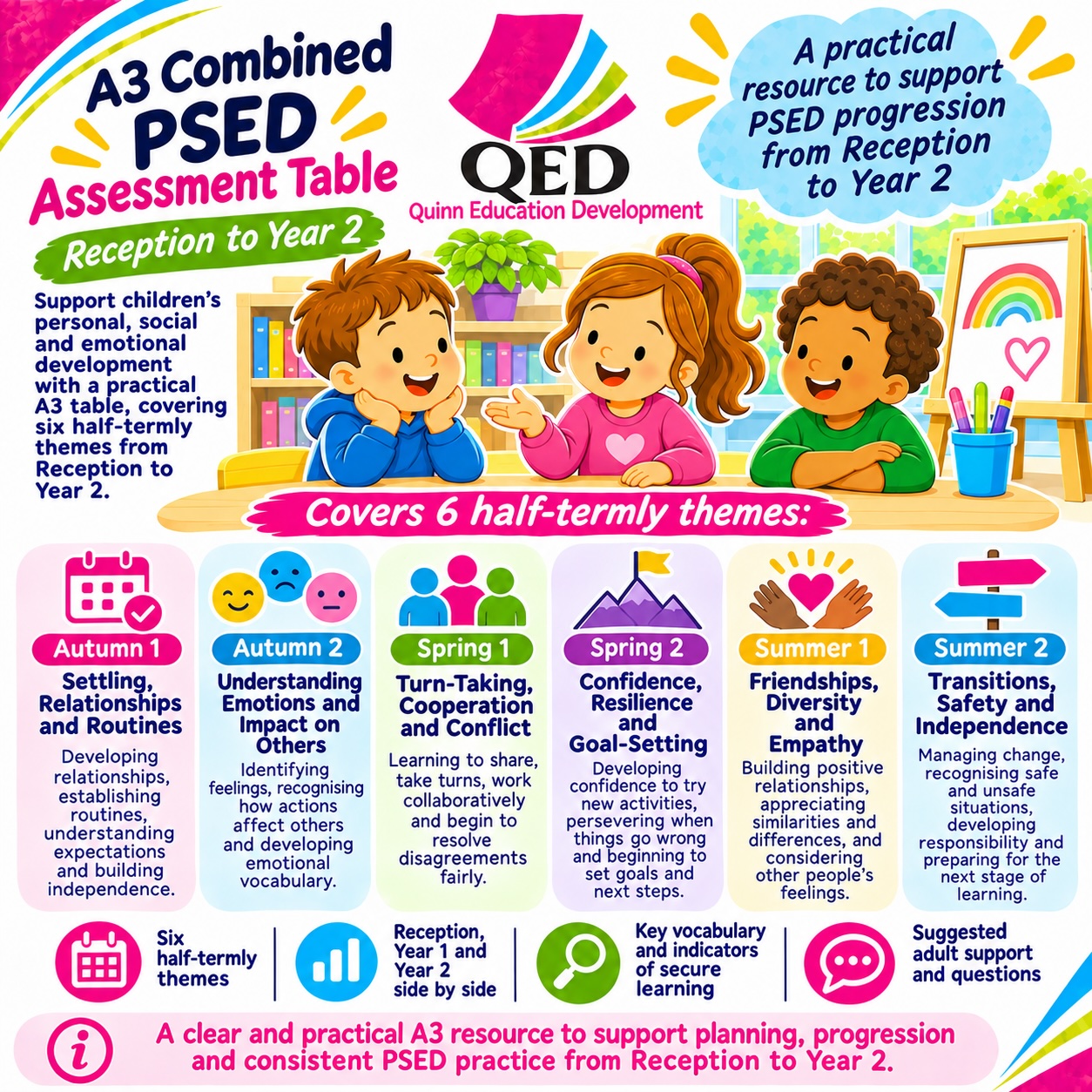
Support children’s personal, social and emotional development from Reception through to Year 2 with this practical A3 Combined PSED Assessment Table. Designed to bring three year groups together in one accessible overview, the table maps key developmental objectives across six half-termly themes, helping teachers plan learning, observe progress and identify appropriate next steps.
By aligning Reception, Year 1 and Year 2 within each half-term, this resource helps teachers and leaders see how children’s developing social skills, emotional understanding, independence and relationships can be supported as they move through the early years of primary education.
The table covers six half-termly themes:
Autumn 1 – Settling, Relationships and Routines: developing relationships with adults and peers, establishing classroom routines, understanding expectations and building independence.
Autumn 2 – Understanding Emotions and Impact on Others: identifying feelings, recognising how actions affect others and developing a wider vocabulary to describe emotions.
Spring 1 – Turn-Taking, Cooperation and Conflict: learning to share, take turns, work collaboratively and begin to resolve disagreements fairly.
Spring 2 – Confidence, Resilience and Goal-Setting: developing confidence to try new activities, persevering when things go wrong and beginning to identify goals and next steps.
Summer 1 – Friendships, Diversity and Empathy: building positive relationships, appreciating similarities and differences, and considering other people’s feelings and perspectives.
Summer 2 – Transitions, Safety and Independence: managing change, recognising safe and unsafe situations, developing responsibility and preparing for the next stage of learning.
Each half-termly section includes objectives, relevant vocabulary, indicators of secure learning, suggested adult support and questions to guide teaching. This gives staff practical starting points for supporting children’s development through everyday classroom experiences, structured activities and adult interaction.
Suggested approaches include modelling routines, using emotion cards, providing turn-taking games, supporting cooperative group activities, encouraging reflection after setbacks and using diverse books to explore friendship and difference. Questions such as “What made you feel that way?”, “What would be a fair solution?” and “How might they see this situation?” can help adults encourage children to talk about feelings, explain their thinking and consider different perspectives.
The table also recognises that personal, social and emotional development changes over time. Reception children may need encouragement to share resources or manage transitions, while older pupils are supported to demonstrate greater independence, resolve simple conflicts, set goals and take responsibility for their choices.
Designed for practical use, the A3 format provides a shared overview for classroom planning, professional discussions, transition planning and reviewing provision across Reception and Key Stage 1. It can also help EYFS and KS1 teams discuss continuity in their approaches to relationships, emotional literacy, resilience and independence.
Whether you are a Reception teacher, KS1 class teacher, EYFS leader, PSHE lead or senior leader, this resource offers a useful framework for organising PSED planning and supporting discussion about children’s developing skills.
Please note: The objectives and secure indicators are intended to support professional planning and observation. They should be used alongside your school’s curriculum, knowledge of individual children and professional judgement, rather than as a standalone diagnostic tool or substitute for statutory assessment requirements.
Reviews
There are no reviews yet.