Establish clear expectations and strengthen the quality of Early Years practice across your setting.
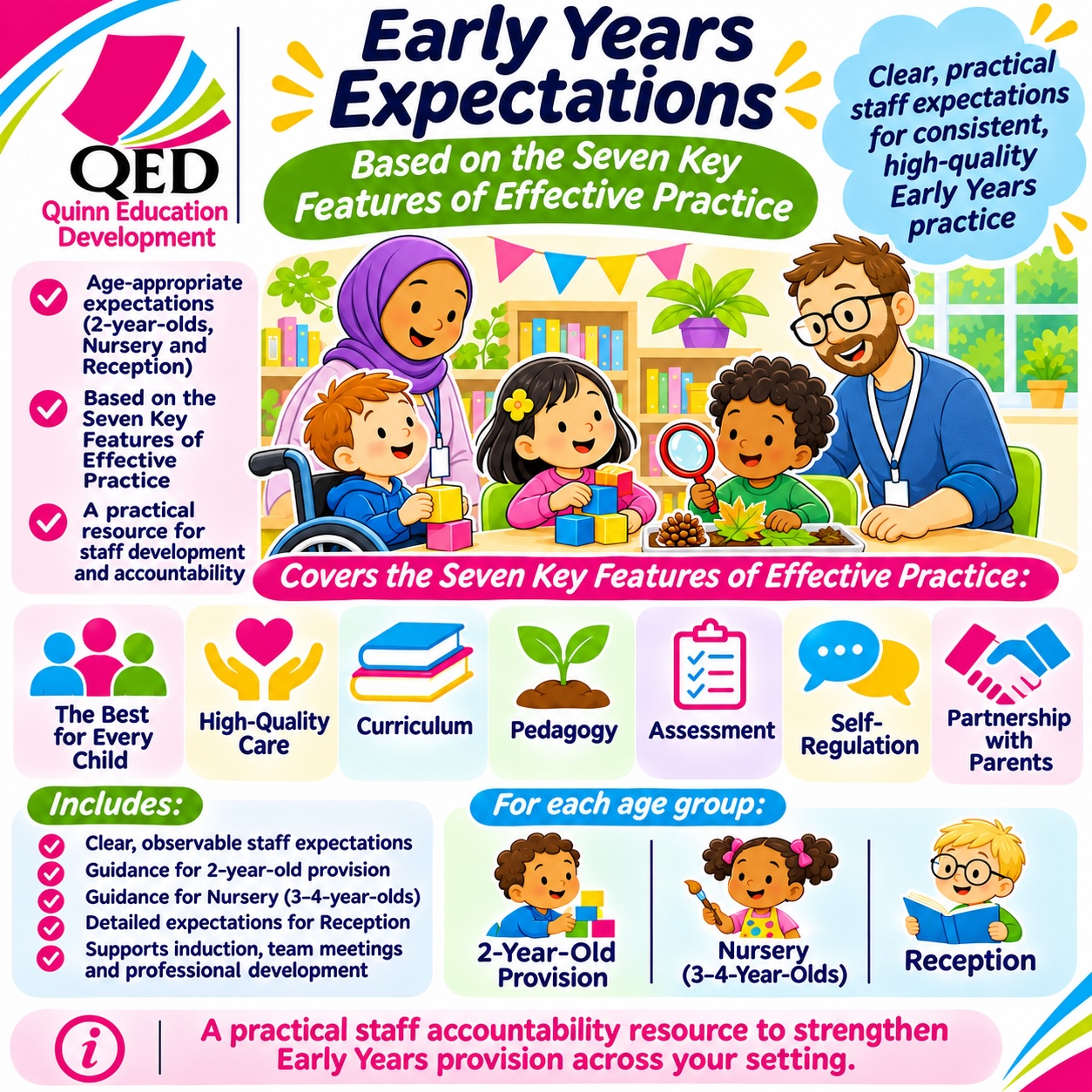
The Early Years Expectations Based on the Seven Key Features of Effective Practice is a practical staff accountability resource designed to help Early Years leaders establish consistent, high-quality provision across two-year-old provision, Nursery and Reception.
Based on the Seven Key Features of Effective Practice, this resource translates key principles of effective Early Years education into clear, practical expectations for practitioners. It helps staff understand what effective practice should look like in everyday interactions, routines, teaching, assessment and provision, providing a shared framework for professional expectations and accountability.
Rather than relying on broad statements about good practice, the document identifies specific actions that staff should implement consistently. This helps leaders communicate expectations clearly, support staff development and establish a more consistent approach across different rooms and age groups.
What does the resource cover?
The document explores the key areas of effective Early Years practice, with age-appropriate expectations for different stages of development.
Two-year-old provision
The expectations focus on:
- The best for every child, including relationships, settling routines and identifying emerging needs.
- High-quality care, including toileting, emotional security and calm transitions.
- Curriculum, including vocabulary, sensory experiences, singing and stories.
- Pedagogy, including exploratory play and purposeful narration.
- Assessment, including observations and communication with parents.
- Self-regulation, including co-regulation, turn-taking and managing sensory stimulation.
- Partnership with parents, including daily handovers and regular communication.
Nursery (3–4-year-old provision)
The Nursery expectations build on these foundations, with a greater emphasis on developing independence, language, early mathematics, phonological awareness and purposeful continuous provision. They also address sustained shared thinking, guided learning, baseline observations, adult deployment and supporting children to manage relationships and emotions.
Reception provision
The Reception section provides a more detailed framework covering:
- The best for every child and the use of Leuven well-being and involvement observations.
- High-quality care and consistent routines.
- Curriculum delivery, including phonics, early mathematics and vocabulary.
- Pedagogy, play, adult interactions and sustained shared thinking.
- Using play to assess children’s knowledge and understanding.
- Assessment, observations and responsive teaching groups.
- Self-regulation and executive function.
- Partnership with parents.
Particular attention is given to the adult’s role in play, using interactions to assess children’s knowledge, recognising different play behaviours and adapting provision in response to children’s engagement and learning.
Supporting consistent practice and accountability
This resource provides a useful starting point for staff induction, team meetings, professional development and discussions about expectations across Early Years. Leaders can use it to clarify responsibilities, identify inconsistencies in practice and support more focused conversations about the quality of provision.
It also helps establish a shared understanding of how effective practice should look across different age groups, ensuring that expectations are appropriate to children’s developmental stages while maintaining a consistent commitment to high-quality care, teaching and learning.
Who is this resource for?
This resource is suitable for Early Years leaders, EYFS leads, Nursery and Reception teachers, room leaders, teaching assistants and school leaders responsible for the quality of Early Years provision.
Whether you are establishing expectations at the beginning of the Autumn term, supporting a new team or strengthening consistency across your setting, this document provides practical guidance to help turn effective practice into clear, everyday actions.
A valuable addition to your Early Years leadership toolkit, helping your team understand not just what effective practice looks like, but what is expected of them every day.


Reviews
There are no reviews yet.