
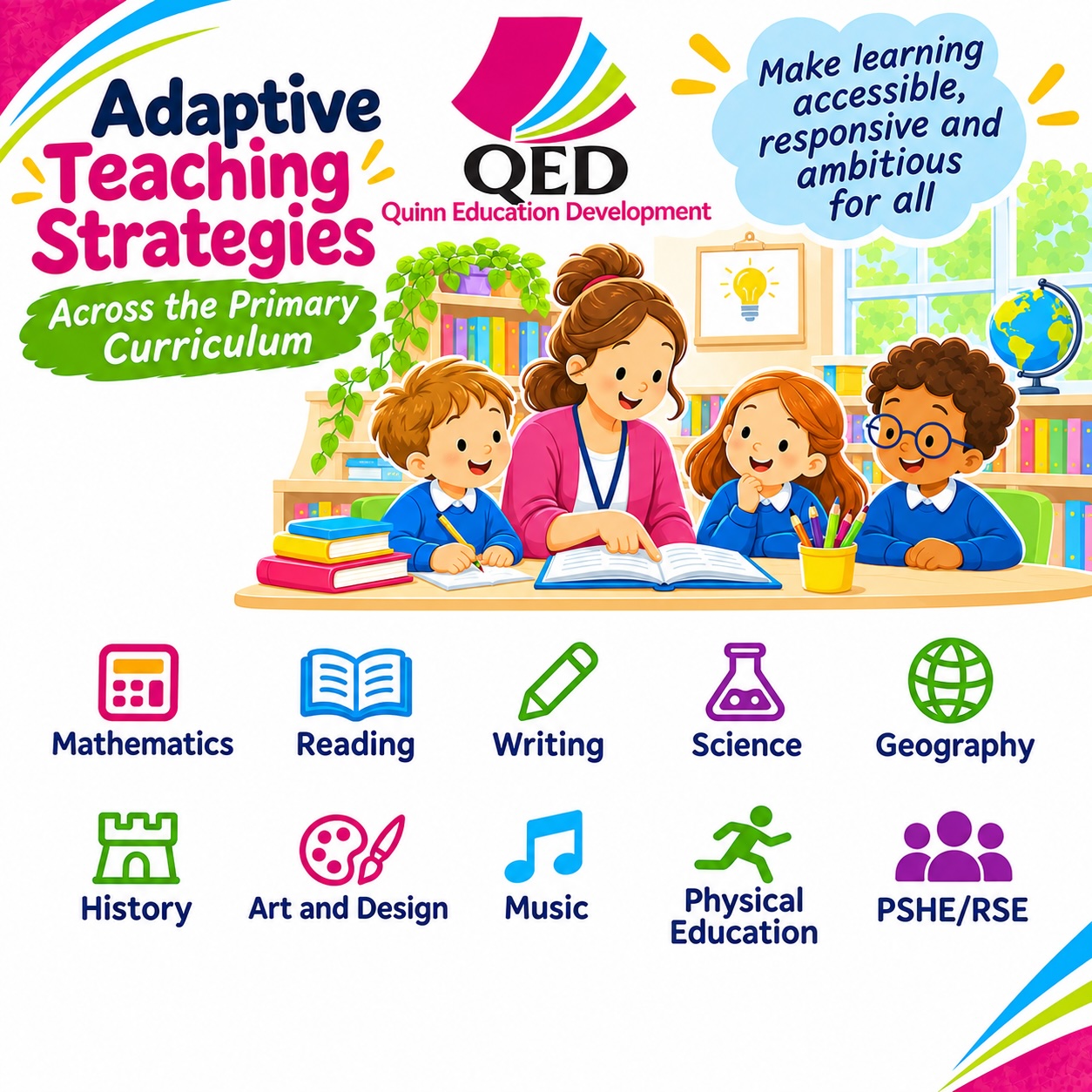
A practical guide to adaptive teaching across 10 primary curriculum subjects. Includes whole-school principles and subject-specific strategies to support access, scaffold learning, build independence and maintain high expectations for every pupil.
£5.00
A practical guide to adaptive teaching across 10 primary curriculum subjects. Includes whole-school principles and subject-specific strategies to support access, scaffold learning, build independence and maintain high expectations for every pupil.
Practical adaptive teaching strategies for every primary subject
Adaptive Teaching Strategies Across the Primary Curriculum is a practical guidance resource designed to help primary school teachers respond to pupils’ different starting points, learning needs and levels of understanding while maintaining high expectations for all.
Effective adaptive teaching is about making learning accessible without lowering ambition. This resource brings together whole-school principles and subject-specific strategies to help teachers plan responsive lessons, identify barriers to learning and provide the right level of support and challenge.
It encourages teachers to use ongoing assessment to inform their decisions, introduce flexible scaffolds where needed and gradually remove support as pupils become more confident and independent. By considering how adaptive teaching works across different subjects, teachers can make informed choices about explanations, resources, modelling, questioning and opportunities for practice.
What’s included?
The resource begins with whole-school principles that underpin adaptive teaching across the curriculum, including starting from pupils’ current understanding, maintaining high expectations, using assessment responsively and providing varied representations and materials.
It then explores practical strategies across 10 primary curriculum subjects and areas:
Maintain ambition while removing barriers
The resource reinforces the principle that teachers should adapt the route to learning rather than lower the intended ambition. Strategies such as worked examples, vocabulary scaffolds, visual supports, guided practice and structured discussion can help pupils access learning while continuing to develop the knowledge and skills they need.
It also recognises that adaptive teaching looks different across subjects. The support needed to develop mathematical reasoning may differ from the support needed to interpret historical evidence, compose music or participate in a PE lesson.
Teachers can use the strategies to review lesson planning, reflect on classroom practice, support pupils who need additional scaffolding and provide appropriate opportunities for greater depth and challenge.
Who is this resource for?
This resource is suitable for primary teachers, subject leaders, teaching and learning leads, SENCOs and senior leaders supporting consistent classroom practice.
It can be used for individual professional reflection, staff meetings, professional development sessions, subject planning and whole-school discussions about adaptive teaching.
A practical addition to your teaching and learning toolkit, this resource helps translate the principles of adaptive teaching into subject-specific classroom strategies, supporting access, progress and independence across the primary curriculum.


Reviews
There are no reviews yet.